
Better Service – Better Price – Better Value
Water Heater Special
How Do You Know When its Time to Fix or Replace a Water Heater?
There are some parts of a water heater than can be repaired or replaced. However, if your water heater is 8 years or older, it is normally a better investment to put your money towards a new water heater versus repairs at that age. If the water heater tank is leaking then it is un-repairable and in need of replacement. We repair and replace all brands of water heaters.
Should You Repair or Replace?
According to manufacturer’s suggestions, the life expectancy of a water heater is about 8 to 12 years. Several factors can effect the life span including location and design of the unit, quality of installation, maintenance schedule and water quality.
If your water heater is more than 10 years old and leaks or seems to not work as well as it once did, it’s probably time for a replacement. If your water heater is less than 8 years old, a simple tune-up may be an easy and cost effective way to keep it running properly.
Is there a tune-up option?
Yes! Not all water heaters need to be replaced. Think of your water heater as your car. There are a few simple things you can do to keep it running smooth but every once in a while, a professional tune-up will help to make sure everything is working properly and you are getting all that you can out of your water heater. If a car is driven every day but never maintained, the gas mileage goes down. The same principle applies to your water heater. Without proper care and maintenance, the water temperature slowly drops over time as the cost to run the water heater gradually increases. A professional tune-up can help to get your water nice and hot and may reduce your energy costs.
Troubleshooting Common Issues
One of the most common problems associated with a water heater is warm or ‘not hot’ water. There may be simple ways to troubleshoot this problem. Start with the following steps:
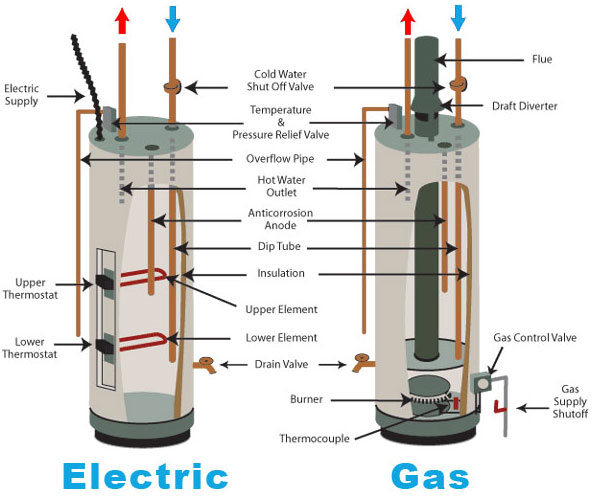
Electric water heater
- Make sure that the power is connected. Reset the thermostat.
- Check for sediment buildup in the tank.
- Insulate the hot water pipes.
- Replace the heating element or thermostat.
- Try to raise the temperature setting on the thermostat.
Gas water heater
- Make sure that the gas is connected and the pilot light is lit.
- Check for sediment buildup in the tank.
- Insulate the hot water pipes.
- Clean the gas burner and replace the thermocouple.
- Try to raise the temperature setting on the thermostat.
What is sediment?
Sediment is a collection of tiny particles found in water supplies that slowly builds up and remains in a water heater tank over time. Sediment is a serious problem that effects almost all water heaters, especially those with heavy use. Imagine a pot of boiling water with a brick placed between the pot and the stove. The brick would transfer heat eventually but would require much more time and energy to allow the water to boil. Sediment is the ‘brick’ in a water heater. It collects at the bottom and requires much more time and energy to allow the water enough heat to reach its desired temperature. If your water heater thermostat is as high as it can go but the water temperature is not as hot as it used to be or takes a long time to heat up, there may be a significant sediment buildup sitting in the tank (the same tank that supplies water to every faucet of your home). To check for this, we will run a very small and flexible camera into your water tank that allows us to see if there is sediment build up. Below is an 11-year-old water heater tank that we cut in half to show sediment buildup.
Other common water heater problems:
- Hissing or sizzling noises: Sediment may have collected in the tank.
- Leaking pressure-relief valve: Valve needs to be replaced.
- Leaking water pipes: Fittings may need to be replaced.
Water Heater Maintenance
Water heaters require little maintenance but some steps are important to be done regularly. If you have not completed the following steps on a regular basis, your water heater may not be operating efficiently:
- 2 times per year, drain the water heater and refill to help clear sediment.
- Lift the pressure-relief valve handle periodically to make sure it releases water into the overflow drain and ensure it is working properly.
- Lower the temperature setting on the thermostat when the heater is not in use for long periods of time.
When is it time to replace?
If your water heater is leaking or not making water hot enough and you have tried the troubleshooting tips above AND properly performed the regular maintenance, it may be time to replace.
I think I need a new water heater. What should I look for?
- Gallon capacity (40-gallon and 50-gallon heaters are the most common)
- Recovery rate (the number of gallons the heater will heat in an hour)
Dimensions (width and height — will the heater fit in the space you have for it?) - Energy efficiency ratings (a sticker on the side should list the estimated annual cost of operation for the unit)
- Before making repairs or purchasing a new water heater, check the nameplate on the side of your current unit. Here you will find helpful information including the tank capacity, insulation R-value, installation guidelines, working pressure, model and serial number. If you have an electric water heater, the nameplate will also list the wattage capacity and voltage of the heating elements.
This information will serve as the starting point in your search for replacement parts or a new water heater. For help choosing a water heater, Delaware Plumbing Professionals will perform a free estimate based on your current heater and what you are looking for with your next water heater. Has the number of people living in your home increased or decreased? Maybe you need a larger or smaller tank.
Included with all Delaware Plumbing Pros installations:
We take the old one! Local government codes require special disposal. We will take your old water heater and dispose of it based on current disposal requirements.
Low impact installations! We treat your home as our own when it comes to moving the old water heater out and the new water heater in. Check out our reviews to see what our customers think of our friendly and professional service.
We have the tools to allow for timely installations! Water heater installation requires a number of tools specific to water heater installation. Over the years we have installed 1,000s of water heaters and we come fully quipped to finish the job so you can get back to enjoying a nice hot shower.
Knowledge and expertise! As a licensed plumber in your area, we are familiar with all codes for installing water heaters. We are responsible to ensure your water heater is installed according to codes in your area. This is important if you plan to sell your home and for the overall safety of you and your family.